Edgewater
Edgewater Neighborhood Guide 2026
About Edgewater
Edgewater, Chicago’s Community Area #77 is a beautiful lakefront neighborhood on Chicago’s far North Side, about seven miles from downtown.
Bounded by Lake Michigan on the East, Foster Avenue on the South, and Devon Avenue to the North, Edgewater Community Area reaches west to the Union Pacific North Metra train tracks.
Edgewater is known for its mix of historic character, beach vibes, and relaxed, residential feel.
The area began in the 1880s as a planned suburb developed by John Lewis Cochran, who marketed it as an upscale lakeside retreat for wealthy Chicagoans. The area quickly grew, was annexed into Chicago in 1889, and by the early 20th century had become one of the city’s most prestigious communities, with mansions along Lake Michigan and dense apartment buildings inland.
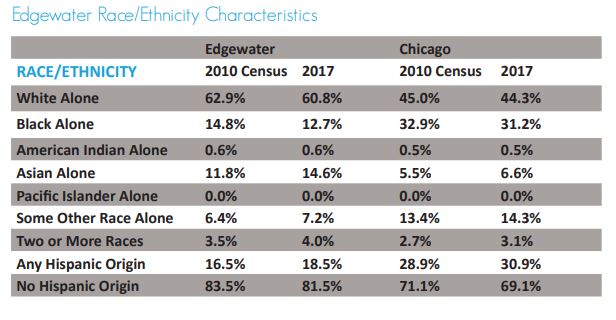
Today, Edgewater is widely known for its diversity and eclectic population, shaped by waves of immigration from European groups early on to a broad mix of African, Asian, and other cultures today. It’s considered one of Chicago’s more inclusive neighborhoods, with a range of housing from vintage walk-ups, iconic greystones, soaring mid-century lakefront high-rises, student housing for Loyola University, century-old single-family homes, beautiful historic mansions, and even an art deco-era masterpiece (The Belle Shore Building).
One of the most scenic neighborhoods in the city, Edgewater is highly walkable and full of local character. Tree-lined residential streets sit just blocks from Chicago’s best beaches, parks, and the lakefront trail, giving the area a balance of urban density and outdoor access.
Economically and culturally, Edgewater revolves around small businesses, local restaurants, and neighborhood corridors like Broadway, Clark Street, Granville Avenue, and Devon Avenue, where you’ll find everything from international cuisine to antique shops and coffeehouses. Tourism is driven by lakefront beaches, historic districts like Bryn Mawr Avenue, and an “off-Broadway” small theatre district.
CTA’s Red Line runs through Edgewater, providing direct access to downtown, while buses on Lake Shore Drive and Broadway make commuting relatively easy. Overall, Edgewater combines accessibility, diversity, and a calmer residential feel, making it a distinctive slice of Chicago’s North Side.
TRANSPORTATION
Public transit (CTA trains & buses):
The backbone of the neighborhood is the CTA Red Line, which runs 24/7 and connects Edgewater directly to downtown Chicago, The Northern Suburbs, and the South Side. Within Edgewater, there are four convenient CTA train stations: Berwyn, Bryn Mawr, Thorndale, and Granville. Trains run frequently (as often as every few minutes during peak times), making it one of the fastest ways to commute.
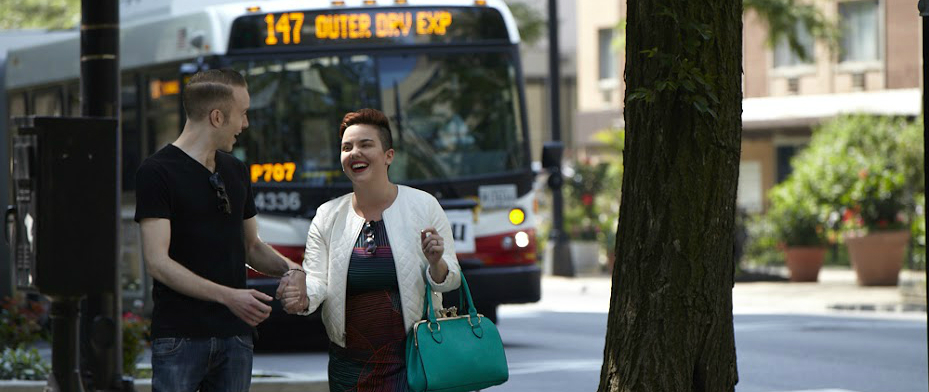
Several CTA routes run along Broadway (36), Clark Street (22, 50), and Sheridan Road (151, 155), while express buses on Lake Shore Drive (136, 143, 147, 148) provide relatively quick trips to downtown via Michigan Avenue. East-west service runs on Foster (92), Peterson (84), and Devon (155). Some routes even operate overnight (“Night Owl” service), so transit is available at all hours.
Regional rail & connectivity:
Edgewater brand new Metra stop at Ridge-Peterson, along the Metra Union Pacific North Line provides commuter rail access to downtown (Ogilvie Transportation Center) and northern suburbs.
Driving & biking
For drivers, Lake Shore Drive runs from the Hollywood Avenue south towards downtown, offering a relatively direct route to downtown and area expressways (traffic permitting). But many Edgewater residents rely more on biking and walking: Edgewater sits right on the Chicago Lakefront Trail, Chicago’s major north-south path used for commuting and recreation.
Edgewater Demographic Information
Edgewater was originally developed as a summer destination. In the late 1880’s it was annexed by the City of Chicago. Edgewater has a rich history of welcoming people from around the globe to the neighborhood. In 2000, 36% of its population was foreign born, by 2010 approximately 31% of the population was foreign born. You can find historical census information on the Edgewater Historicall Society’s website. As of 2017, Edgewater’s population was 57,560. The median Household Income was $48,315. Fifty-six percent of the population holds a bachelor’s degree or higher.